
Bandhavgarh National Park
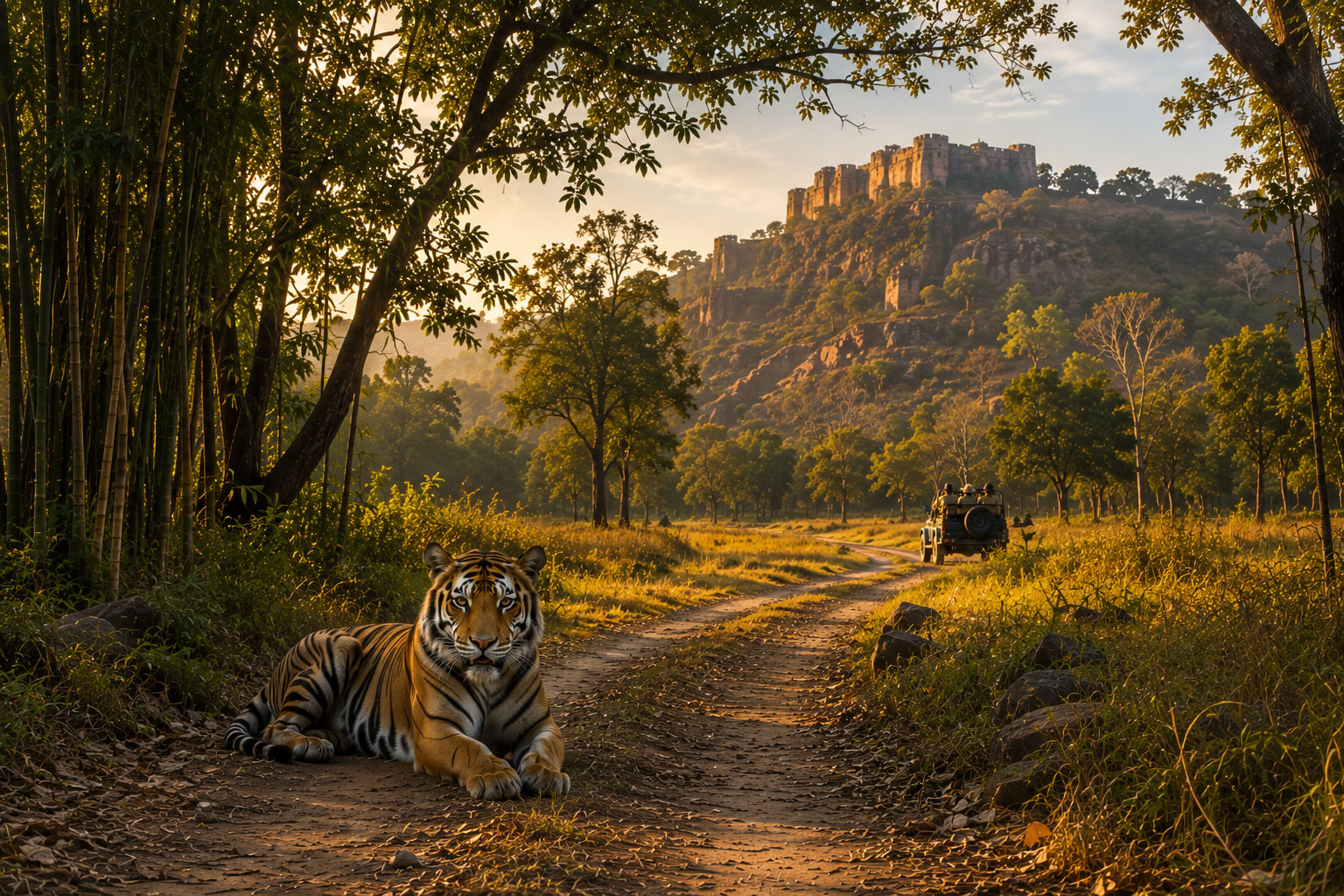
Bandhavgarh National Park: Experience the Land of the Highest Tiger Density in India
The Vindhya mountain regions in Madhya Pradesh belong to Bandhavgarh National Park. The national park is separated into a buffer region of about 400 sq km and a core area of 105 sq km. The entire region’s geography alternates between broad meadows, rolling forests, and rocky ridges. The Royal Bengal Tigers are well-known in Bandhavgarh National Park. In both India and the world, Bandhavgarh has the highest tiger population density. Once the Maharaja of Rewa’s hunting preserve, the national park is now a well-known natural center for white tigers.
White tigers were initially found in Rewa, not far from here, and are now a popular attraction in parks worldwide. Additionally, it is thought that Bandhavgarh is the natural home of all white tigers worldwide. The landscape is fragmented, with green wetlands and wooded valleys scattered throughout stony hill ranges that approximately run east and west.
History of Bandhavgarh National Park
The Bandhavgarh Fort, situated atop the Bandhavgarh hill in the center of the Bandhavgarh National Park, served as the headquarters of the local monarchs until the capital was moved to Rewa in 1617 A.D. After the capital was relocated to Rewa, Bandhavgarh gradually fell into desolation and became a royal hunting reserve as the forest took over. Each maharaja set out to kill 109 tigers because they thought it would be fortunate, even though doing so helped preserve India’s forests and native wildlife. Maharaja Venkat Raman Singh killed 111 tigers by 1914.
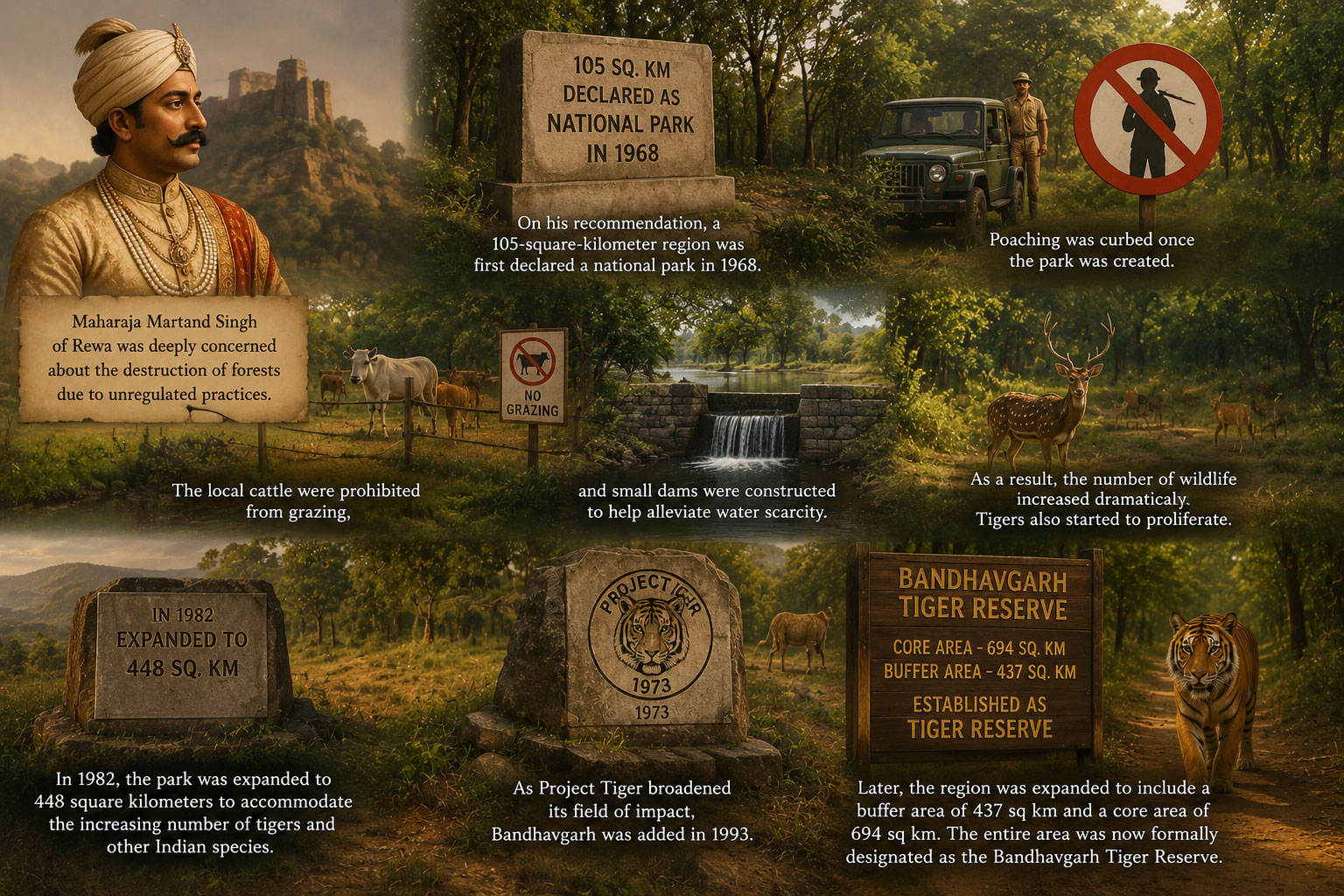
As Project Tiger broadened its field of impact, Bandhavgarh was added in 1993. Later, the region was expanded to include a buffer area of 437 sq km and a core area of 694 sq km. The entire area was now formally designated as the Bandhavgarh Tiger Reserve.
Mobile No.
+91-9413758631 / +91-9024068225
info@nationalparkindia.com
Address
Ranthambore Circle, Ranthambore Road, Sawai Madhopur (Raj.) 322021 INDIA